Wonder came first.
About a year and a half before I was born, my mother sat glued to a television in a mobile-home neighbourhood in Bradenton, Florida, where my family lived at the time. It was July 1969. Apollo 11 had reached the Moon. Soon afterwards, Neil Armstrong stepped onto its surface and described it as ‘one small step for man, one giant leap for mankind’. He was right, though perhaps in a different way from what we understood then.
My mother told this story so often and with such awe and enthusiasm that I sometimes say I drank the significance of that moment in, with my mother's milk.
What has stayed with me is what that journey allowed us to discover about Earth. For the first time, humans could travel far enough away to look back at our world as a whole: a finite, luminous planet floating like a fragile marble in space. That image has always awakened wonder and curiosity in me.
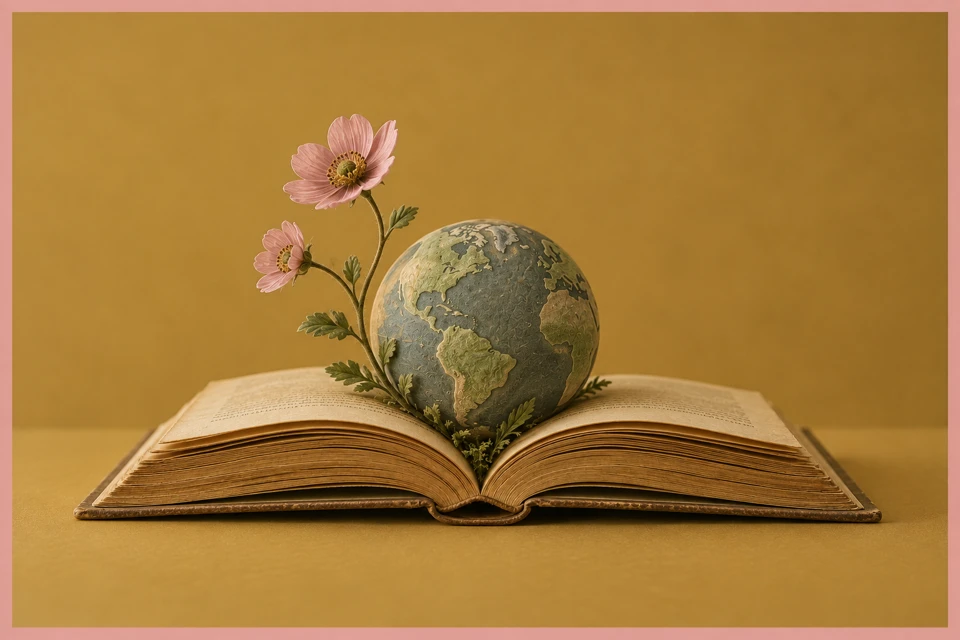
Much later, when I heard about the Overview Effect, I found words for something I had sensed for a long time: knowing something is not always the same as experiencing it. Perhaps we knew that Earth was one, but our world was not yet one.
It is no coincidence that the photographs astronauts took of Earth from space quickly became symbols of the environmental movements we know today.
The curiosity I associate with images of Earth never left me. It grew into a love of travel and experiences in nature, and a desire to understand this strange, beautiful and complicated world we live in.
That desire to understand led me to study philosophy. There, one of my teachers, Páll Skúlason, sparked something in me with an explanation that has stayed with me ever since: philosophy arises when we stand in wonder before reality.
I find that a beautiful thought. Wonder interrupts the everyday. It prompts us to stop taking the world for granted and see something new. It can awaken curiosity and a desire to understand, discover, learn and experience. And perhaps most importantly for HomeBeing, wonder can free us from what seems inevitable. When we see the familiar afresh, it becomes easier to imagine that things could be different.
Many years later, curiosity and the desire to understand led me towards sustainability. I completed a diploma in education for sustainable development with the Earth Charter. There, the task was to explore our relationship with nature, and the values and ways of thinking we need to cultivate to build a more sustainable world.
Gradually, different threads began weaving together: philosophy, sustainability, nature, design, embodiment, the nervous system, language and imagination. Alongside them was my interest in how our surroundings help shape our existence, wellbeing, feelings and thought.
Eventually these reflections led into our closest and most personal surroundings: home. I began wondering what might happen if we stopped thinking of home primarily as an investment to design, and began seeing it as an environment we are constantly in relationship with: an ecosystem in continual interaction with our bodies, minds and nervous systems. One that shapes habits and relationships, holds memories, supports identity and can even become part of how and what we think.
That journey became HomeBeing. And it begins where philosophy has its origins: in wonder, curiosity, the desire to understand and the willingness to ask new questions.
What if home could be different?