15 Days with HomeBeing
One piece of music and one small listening experiment each day. Fifteen days to listen for the Earth, nature and the life around us.
 Choose this calendar →
HomeBeing · AN EXPERIMENT IN LIVING
Our connections to the world lie within the small, ordinary things of everyday life.
HomeBeing explores the connections between ideas, sustainability, design and nature.
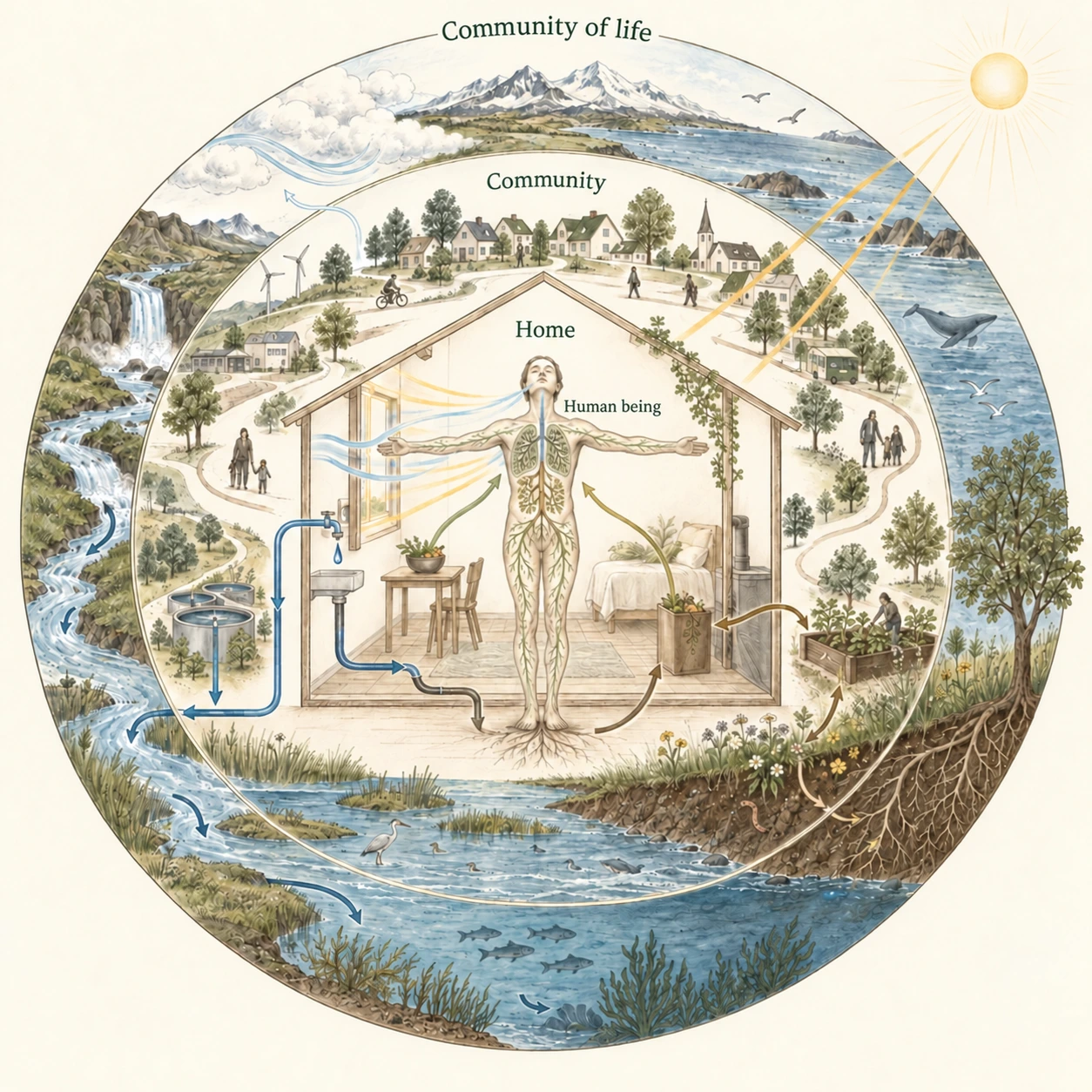
One of the wonders of being human is that we can reconsider our ideas, experiences and values. What might change if we thought of ourselves as participants in the community of life? As part of nature, rather than beings merely living in it?
Air becomes breath. Water and nourishment become part of our bodies. The boundaries between us and our surroundings are real, but they are also open.
Our relationship with nature does not begin at the front door or the edge of town. We breathe air for oxygen, eat, recover and rest in constant exchange with our surroundings and the natural world.
The food we eat, the water we drink and the things we buy all have a story. That story is woven into life itself. What leaves our homes has an impact wherever it ends up. Home is connected to other people's work, the infrastructure of society and ecosystems elsewhere.
Our habits at home therefore reach far beyond its walls. What do we keep, repair and share? What do we throw away? What do we care for? Sustainability takes shape in the conditions we help create through our habits and values, at home and beyond.
Home offers shelter, but it also needs to let life in: daylight, healthy air, clean water and nourishment. Our communities meet complex needs, yet they too must work with life if we are to thrive. Noticing these connections can begin wherever we are, by looking at what already surrounds us.
Design plays an important role in shaping the conditions of our lives. It affects whether our surroundings meet our needs and make room for rest, safety and time together; whether different bodies can gain access and participate in community life.
Regenerative design also asks how we can care for the life we belong to and depend on. Can homes, neighbourhoods and infrastructure protect water, soil and ecosystems while supporting and nourishing us?
HomeBeing CALENDARS
Sometimes our days are taken up by whatever calls the loudest. There are countless tasks to attend to and responsibilities to carry. The things we love and want to make time for may have to wait for another day.
HomeBeing calendars offer small reminders of connection and the wonders of life in the midst of these ordinary days. A story, a question or a simple experiment can open our eyes to something we have overlooked. It might spark curiosity, bring a smile or remind us of what matters to us. Perhaps something then shifts in how we meet the day, the people around us or the tasks ahead.

Download a calendar and the whole series is added to your own calendar at once. One ping a day. No new app or registration required. No feed to follow and nothing to hand in. You decide what to take with you.
One piece of music and one small listening experiment each day. Fifteen days to listen for the Earth, nature and the life around us.
Choose this calendar →HomeBeing experiments with using the simplest possible technology, asking as little as possible of our time and attention. Technology that opens a window onto life, then leaves us in peace.
That is why we use calendars. One ping that you respond to whenever it suits you. No new app or account, and no feed to keep up with. Just a small reminder that might spark a thought, a conversation or something enjoyable to try in everyday life.
Our time, attention and curiosity are precious. HomeBeing does not want to collect information about people and their interests to keep them on a screen for longer or sell them something.
You do not need to create an account to download a calendar. You do not send your responses to HomeBeing, record your participation or demonstrate progress. Whatever emerges for you can simply be yours.
The idea is for HomeBeing to earn income from content that people choose to buy. The aim is to keep adding material and sustain the project.
Although HomeBeing does not collect information for marketing purposes, using the site can still generate data. The hosting service may log visits, for example, and Spotify and calendar applications process information according to their own privacy policies. HomeBeing therefore cannot promise that no information about use will be recorded.
When we choose technology, it matters to ask what kind of life it helps create. What does it make easier? What does it take away? Who benefits, and who bears the cost?
These questions concern our attention and privacy, but also people's work, creativity, power and the use of natural resources. They become just as pressing when artificial intelligence is involved. Even when technology is convenient and opens up new possibilities, we need to consider the consequences of using it.
That reflection belongs within HomeBeing. Part of this project is about recognising the connections between our everyday actions and the world they help shape.
Parts of HomeBeing are created with the help of artificial intelligence. Anna Lára Steindal is the project's author and uses this technology to develop ideas, create content and communicate. She is responsible for the material published by HomeBeing.
There can be a paradox in using artificial intelligence to encourage people to nurture their relationship with nature, think about sustainability and turn their attention away from technology. HomeBeing acknowledges this and takes the discussion of AI's effects on nature and communities seriously. These include energy and resource use, working conditions, copyright and the concentration of power.
Good intentions do not automatically justify every means of pursuing them. Such reflection must also be able to lead us to change our minds. Technology can help us put questions into words and recognise new possibilities. Ultimately, though, it is our responsibility to decide what to do with those possibilities and whether we can put them in service of the community of life.
FROM CONNECTION TO EXPERIMENT

Look around wherever you are.
Is there something that invites you to enjoy yourself? Connect? Have fun? Move?
Choose one thing you would like to make more room for in your day. Then consider whether a small change in your surroundings could make it easier.
A book on the bedside table. Walking shoes by the door. Your exercise clothes ready where you can see them.
An empty seat at the table.
Try the change and notice whether it becomes easier to make that activity part of your day. Perhaps it helps. Perhaps it leads you to another question.
Take the idea home with you ↗Here you will find tools for meeting the world with new ideas. Words can raise questions. Images can evoke a feeling. A story or a song can open up a new or forgotten place within you. Begin wherever something catches your interest. Try an idea against your own experience and let it move you. Explore a new meaning in a familiar word. These tools are here to spark thought and stir the imagination. You decide what to do with them.
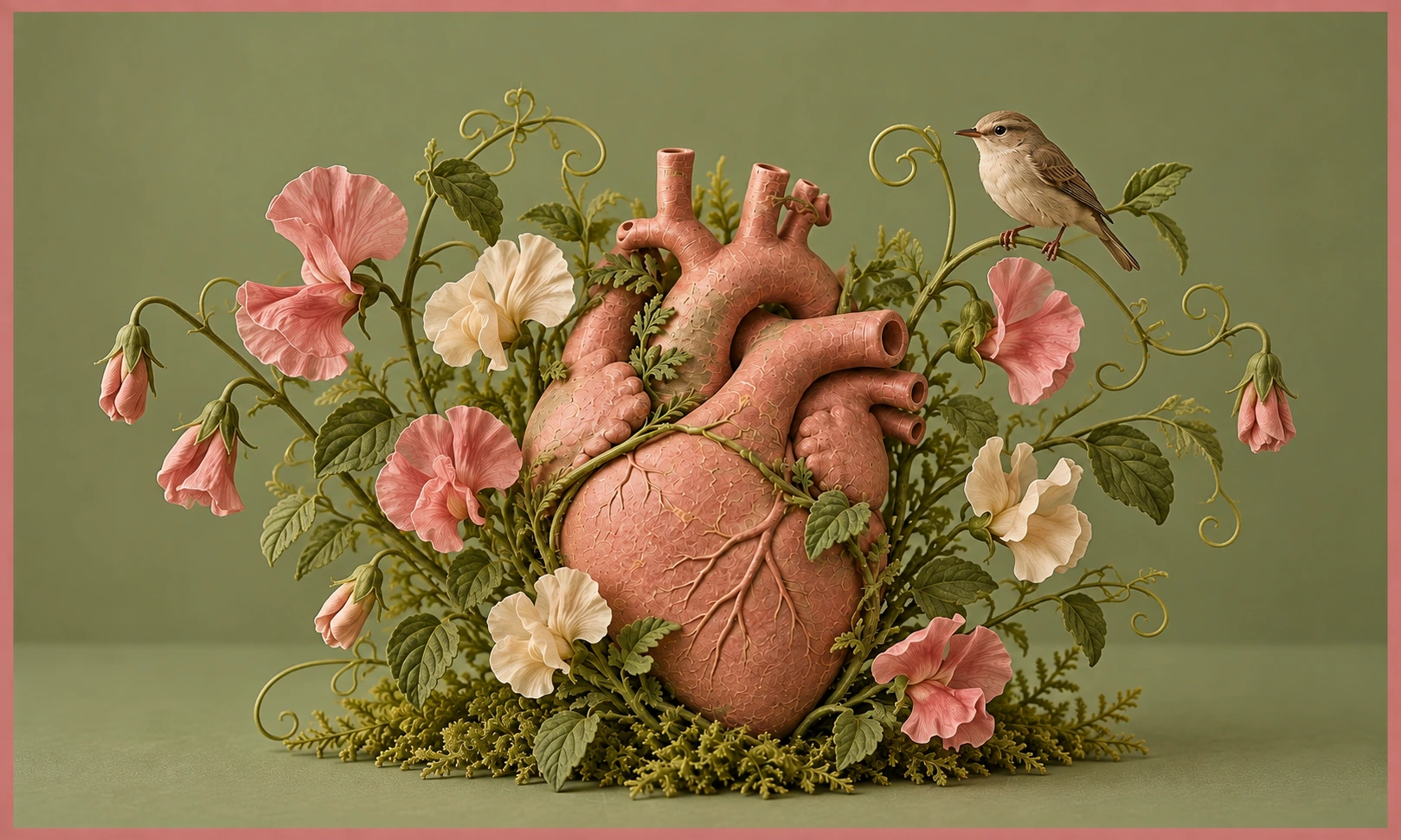
A familiar word can open up a new perspective. Let's explore the meanings we give to words and what changes when we think them anew.
Explore the dictionary →How would you like to feel? Explore how different surroundings evoke feelings and how you can make room for them at home.
Explore the gallery →Stories and thoughts about everyday life, wonder and our relationship with the living world. Questions we can carry with us.
Read the reflections →Ideas can help us see connections that were previously hidden. Explore embodiment, imagination, sufficiency and the community of life, among other themes.
Explore the ideas →Bringing big ideas about sustainability, justice and care closer to everyday life.
Explore the Earth Charter →Music can move us in a different way from words alone. Each song carries a small idea to reflect on: something to feel, think about and take into the day.
Listen →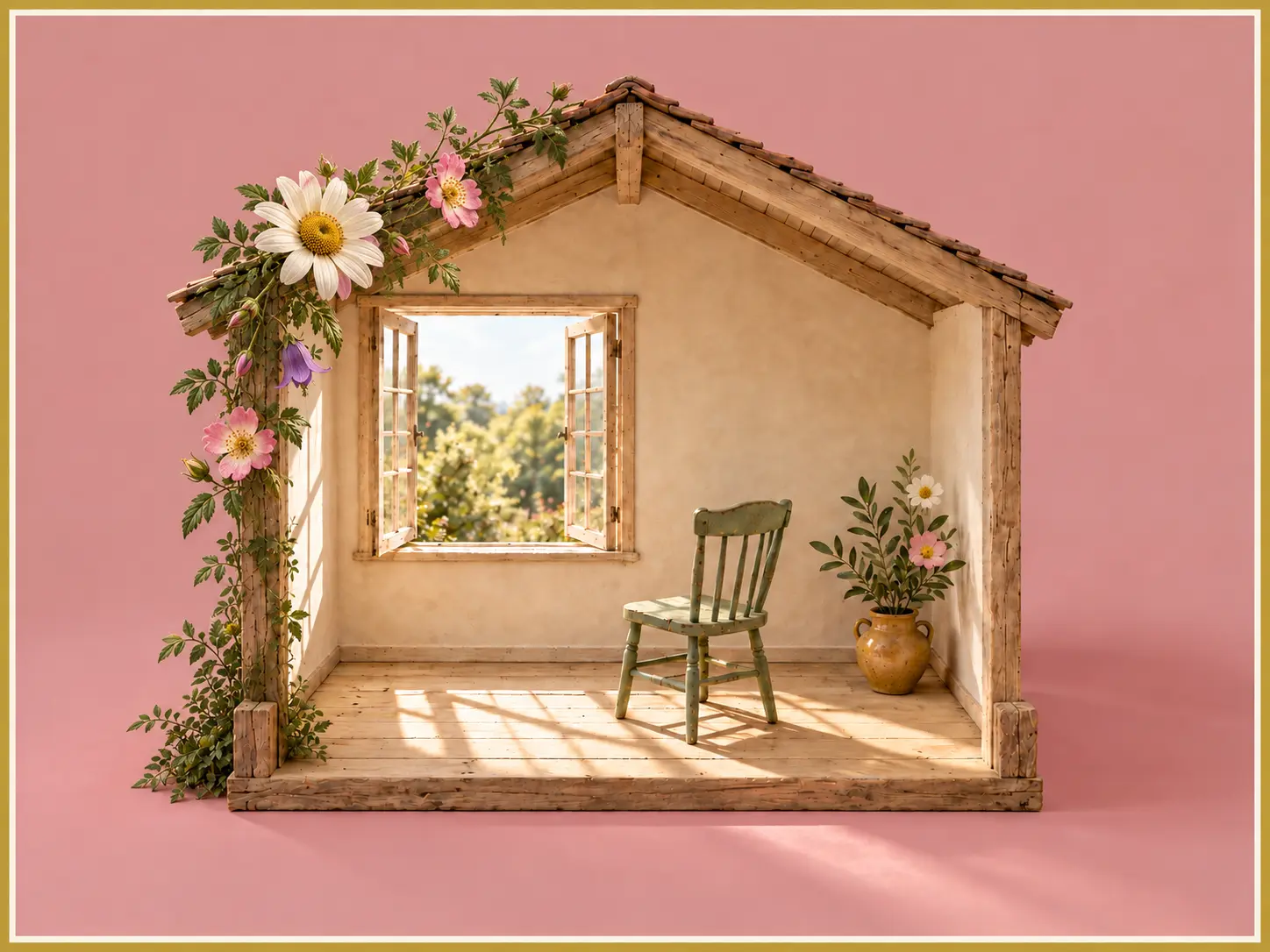
We shape our homes.
Our homes shape our days.
FROM IDEAS TO EVERYDAY LIFE
We shape our homes. They also help shape our days.
A table can invite people to gather. A chair by a window can give rest a place. Things within reach can make it easier to create, repair or play.
At home, many of life's biggest questions meet in small, everyday actions. What do we need? What do we make room for? What do we preserve? How do we want to spend our time and resources? What values are reflected in our immediate surroundings?
Here we can try out ideas about care, sufficiency, creativity and time together, to name a few. What we learn can then travel with us into our neighbourhoods, our work and our communities.
Explore home with fresh eyes ↗ANNA LÁRA STEINDAL

My name is Anna Lára Steindal, and I am the creator of HomeBeing.
Curiosity about life led me to study philosophy and later education for sustainable development with the Earth Charter. My experience in education and human rights work has shaped my interest in how circumstances can enable people to participate and live on their own terms.
Read the story: Wonder came first →AFFILIATION
HomeBeing is an Earth Charter Affiliate and draws on its vision of respect, care and shared responsibility for the community of life.